Core Nursing Duties in Patient Care
The daily duties of a nurse go far beyond administering medicines. Their work touches nearly every aspect of a patient’s recovery journey.
Patient Care and Monitoring
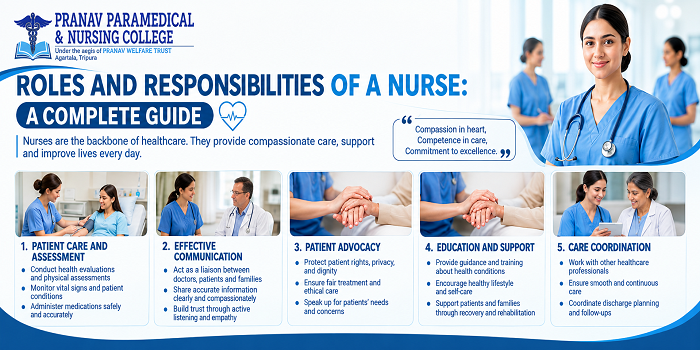
The core of nurses’ responsibilities includes providing care to the patients directly. Nurses measure the vital signs of patients, observe their symptoms, and any other changes in condition that a doctor might miss because of his/her absence. The constant observation can make the difference between preventive measures and an emergency situation. Bedside assistance, hygiene help, and emotional support are also some of the responsibilities of nurses.
Administering Medications and Treatments
Nurses have the task of providing correct medications, injections, and treatment to patients on time. This necessitates good clinical knowledge and skill to identify any negative side effects that may arise from such treatments. Errors in this process carry great risks, which is why nursing studies focus a lot on pharmacology.
Recordkeeping and Documentation
Documentation is perhaps one of the most underestimated aspects of nursing that carries the highest importance in the field. Proper documentation is required for all the patient observations, medications administered, and any changes in the patient’s status. This will ensure continuity of patient care and help physicians to make their decisions.
Educating Patients and Families
Patient education is an essential component of nursing jobs in order to inform patients and their family members about their health problems, treatment regimen, medication schedule, and after discharge. Nurses play an intermediary role in translating complicated medical language into understandable terms for patients. Effective patient education helps achieve positive recovery results and avoid readmission to the hospital.
Supporting Emergency and Preventive Care
Nurses are always the first people to come across when there is an emergency situation, either at the casualty department in the hospital or during a health camp in the community. Their capability to conduct triage of patients, provide initial help, and take urgent cases to the next level can sometimes save lives. Apart from being helpful in emergencies, nurses also participate in preventive care through screening, immunisation, and hygiene promotion.
Administrative and Coordination Responsibilities
Apart from patient-care duties, nurses also act as coordinators of care. The job of nurses involves coordinating with physicians and other members of the health care team to facilitate the implementation of treatment programs. Nurses usually handle scheduling activities and task delegation within the nursing team. Supervision is one of the roles played by nurses in some hospitals, where nurses train junior colleagues and nursing students.
Types of Nurses and Their Specific Roles
Nursing is not a one-size-fits-all profession. Depending on qualification and specialisation, day-to-day duties can vary significantly:
- Registered Nurse (RN): Provides general patient care, administers treatments, and coordinates with physicians across hospital departments.
- General Nursing and Midwifery (GNM): Focuses on general patient care along with maternal and child health, a common entry point into the profession in India.
- BSc Nursing Graduate: Holds a more advanced, degree-level qualification with broader clinical and leadership responsibilities.
- ICU Nurse: Specialises in critical care, monitoring patients with life-threatening conditions who require constant, precise attention.
- Nurse Practitioner: Takes on advanced clinical responsibilities, sometimes including diagnosis and treatment planning, depending on regulations.
- Staff Nurse: Handles day-to-day ward duties, patient care, and documentation within a hospital or clinic setting.
Knowledge about these different pathways can be very helpful for aspiring students to select the appropriate course to pursue, as well as the type of career path that they would like to follow within the nursing profession. Different programs require different entry requirements and have varying lengths.
Skills Every Nurse Needs to Fulfil These Responsibilities
Successfully carrying out these clinical and administrative duties demands a blend of technical and interpersonal skills:
- Clinical competence – accurate assessment, procedural skill, and medical knowledge
- Critical thinking – making quick, sound decisions during emergencies
- Communication – explaining conditions clearly to patients and coordinating with medical teams
- Empathy and patience – supporting patients emotionally, not just physically
- Time management – balancing multiple patients and tasks without compromising care quality
- Attention to detail – especially in medication administration and documentation
These skills are not inborn; they are acquired through education and clinical training, which are essential components of nursing programs taught at Pranav Paramedical & Nursing College. Skills training through simulation laboratories, clinical training in hospitals under supervision, and faculty members who impart knowledge are some of the factors responsible for molding students who can enter the clinical environment without any preparation.
Why the Role of a Nurse is More Important Than Ever
As healthcare demands increase with an aging population and chronic illnesses, there will be a greater need for professional nurses in India and around the world. Well-trained nurses will become more and more indispensable in hospitals and clinics because they will be needed to take charge of many important aspects of patient treatment, apart from assisting doctors. That is why nursing has become one of the most secure and promising professions that young people can choose. In particular, this profession will become very popular in Tripura, where the healthcare facilities are rapidly growing. Both government and private hospitals will have great demand for professional nurses.
Conclusion
As this guide shows, the role of a nurse extends far beyond what most people realise — from clinical care and medication management to patient education and care coordination. It is a profession built on skill, compassion, and continuous learning. If you’re considering a career in this field, Pranav Paramedical & Nursing College offers industry-aligned nursing programmes designed to prepare you for these real-world responsibilities from day one.